

Colocam DX-FIT

Tube

Hospital-Based FIT Screening for Colorectal Cancer.

Rapid, non-invasive fecal testing performed within the hospital setting to support clinician-led screening and decisions on further investigation.

Colocam DX-FIT Tube

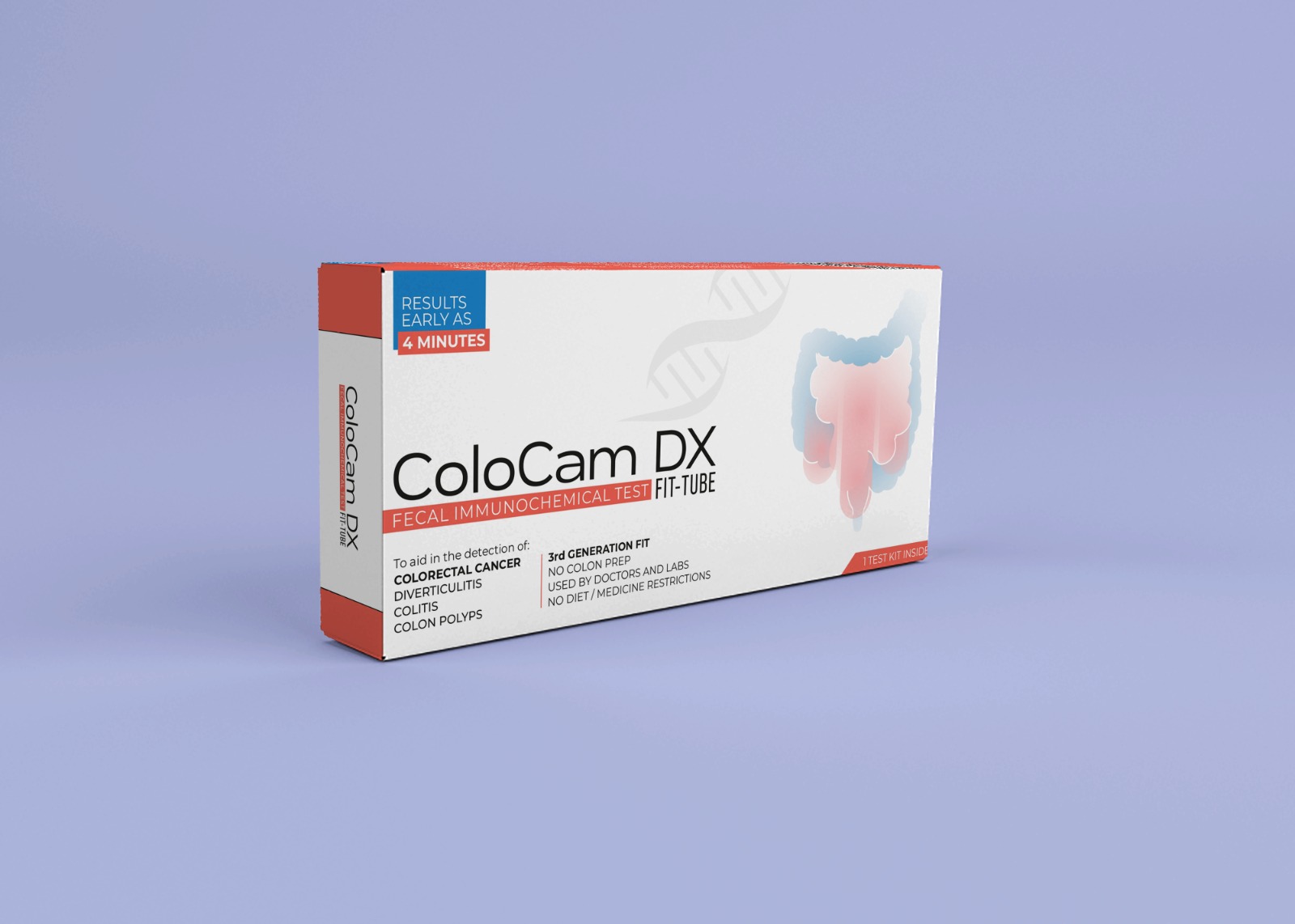
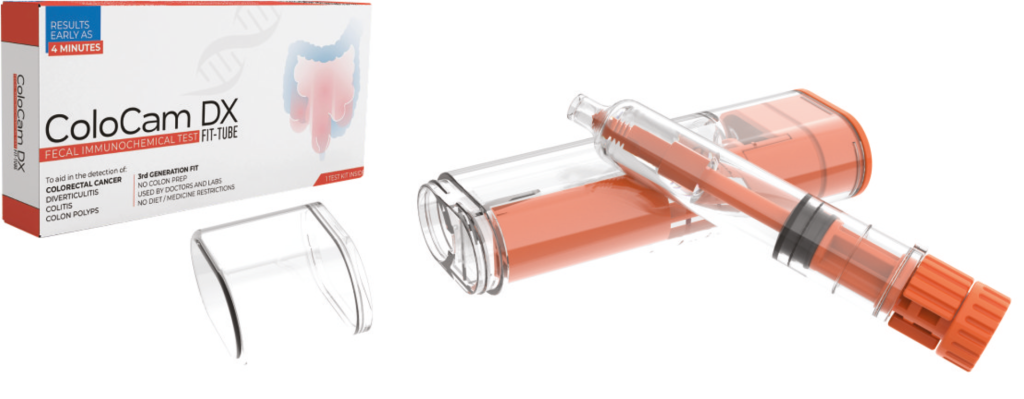
ColoCam Tube® is a CDSCO approved advanced, non-invasive Fecal Immunochemical Test (FIT) designed for reliable, accurate, and affordable all colon disease screening including colon cancer. Recommended and trusted by doctors and hospitals worldwide, this test kit makes early detection simple and accessible.

Take control of your colon health with ColoCam Tube®—a convenient and effective solution for early detection.

With ColoCam Tube®, hospital healthcare professionals can perform rapid, fecal-based FIT screening within the hospital setting. No dietary restrictions are required. The test supports clinician-led colorectal cancer screening and helps inform decisions regarding further investigation.
Redefining Colon Cancer Screening

FAQ

ask us
anything

What is FIT, and how does it differ from gFOBT or multitarget stool DNA tests?
  • FIT (fecal immunochemical test) detects human hemoglobin in stool specifically from the lower gastrointestinal tract, making it more accurate for CRC screening without interference from diet or medications.
  • Unlike guaiac-based FOBT (gFOBT), which requires dietary restrictions and has lower sensitivity (50–70%), FIT is preferred for annual screening.
  • Compared to multitarget stool DNA tests (e.g., Cologuard), FIT is cheaper, requires no DNA analysis, and has higher specificity (reducing false positives), but lower sensitivity for advanced adenomas (23–40% vs. 42% for DNA tests).
Who should use FIT kits in a promotional screening program, and who should avoid them?
  • FIT is ideal for average-risk adults aged 40–75, as recommended by the USPSTF and ACS, especially those hesitant about colonoscopy due to sedation or prep concerns.
  • In promotions, gastroenterologists target underserved or low-adherence populations to boost screening rates up to 34% higher than standard care. Avoid FIT for high-risk patients (e.g., family history of CRC, IBD), those with recent colonoscopy (within 10 years) or symptoms like rectal bleeding, or post-inadequate bowel prep colonoscopy (wait 5 years).
  • Quantitative FITs are suggested over qualitative for adjustable thresholds.
How do you recommend patients collect and get results or how to use ?


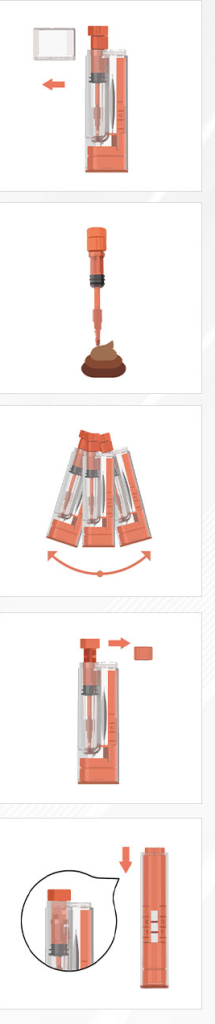
  • The kit is designed for use within a hospital setting, where healthcare professionals collect or receive stool samples and perform the test according to the product instructions. No dietary restrictions are required, and results are typically available within five minutes.

  • Hospital-based FIT screening: The test can be incorporated into hospital screening workflows, providing results in approximately five minutes to support clinical assessment and decisions regarding further investigation.
  • In promotions, emphasize rapid return to minimize degradation; remind patients via calls to achieve 80–90% completion rates. One sample is often sufficient, but guidelines support 1–2 for higher sensitivity.
What should be done if a patient's FIT result is positive?
  • A positive result (blood detected) indicates possible CRC, polyps, or other issues (e.g., hemorrhoids, diverticulitis)—not a diagnosis.
  • Recommend colonoscopy within 8 weeks, as per ColonCancerCheck guidelines, to identify the source.
  • In promotional contexts, gastroenterologists stress free nurse support or referrals for follow-up to ensure 70–80% completion rates.
  • Do not repeat FIT; false positives occur in 5–10% of cases from non-cancer sources.
How often should FIT be performed, and what if it's negative?
  • Annual testing is recommended for average-risk patients to account for intermittent bleeding (10–20% false negatives).
  • A negative result means low CRC risk that year but doesn’t rule out polyps; continue annually.
  • In VA or safety-net promotions, programmatic mailed FITs have increased adherence by reminding overdue patients, reducing colonoscopy backlog by prioritizing high-risk cases.
What are the accuracy, benefits, and limitations of FIT in a clinical promotion?
  • FIT has 92–98% sensitivity for CRC and 23–40% for advanced adenomas, with fewer false positives than gFOBT.
  • Benefits include no sedation, low cost, and high patient acceptance (e.g., OTC kits like Pinnacle BioLabs promoted as “easy alternative” by gastroenterologists).
  • Limitations: Misses upper GI bleeds, requires annual use, and positive results need colonoscopy (increasing demand). In promotions, highlight 90% CRC preventability via early detection.

FIT (fecal immunochemical test) detects human hemoglobin in stool specifically from the lower gastrointestinal tract, making it more accurate for CRC screening without interference from diet or medications. Unlike guaiac-based FOBT (gFOBT), which requires dietary restrictions and has lower sensitivity (50–70%), FIT is preferred for annual screening. Compared to multitarget stool DNA tests (e.g., Cologuard), FIT is cheaper, requires no DNA analysis, and has higher specificity (reducing false positives), but lower sensitivity for advanced adenomas (23–40% vs. 42% for DNA tests).
FIT is ideal for average-risk adults aged 40–75, as recommended by the USPSTF and ACS, especially those hesitant about colonoscopy due to sedation or prep concerns. In promotions, gastroenterologists target underserved or low-adherence populations to boost screening rates up to 34% higher than standard care. Avoid FIT for high-risk patients (e.g., family history of CRC, IBD), those with recent colonoscopy (within 10 years) or symptoms like rectal bleeding, or post-inadequate bowel prep colonoscopy (wait 5 years). Quantitative FITs are suggested over qualitative for adjustable thresholds.

Backed by Global Medical Authorities

WHO | NCCN | ESGE | NICE | ICMR


Please visit our FAQ and News Events page for more information